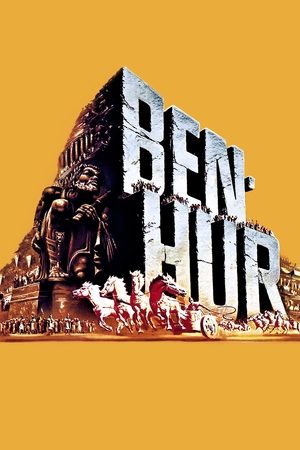
Ben-Hur (1959)
★ 7.9 / 10
In ancient Judea, a Jewish aristocrat opposing Roman occupation of his homeland reunites with his childhood friend, now a Roman commander — setting in motion a saga of betrayal, adventure, tragedy, revenge, and faith.
Editorial Analysis
Film Commentary & Screenwriting Notes
Directed by William Wyler, Ben-Hur stands as the apex of Hollywood's mid-century biblical epics, elevated by literate screenwriting that grounds religious grandeur in fierce political realism. While Karl Tunberg received sole screenwriting credit after a bitter Guild dispute, the script was extensively overhauled by uncredited contributors, most notably Christopher Fry and Gore Vidal. Vidal claimed he solved the motivational impasse between former childhood friends Judah Ben-Hur and Messala by giving their reunion an implicit homoerotic subtext. Stephen Boyd was quietly directed to play Messala as a spurned, resentful lover, while Charlton Heston was kept entirely unaware to preserve Ben-Hur's righteous indignation. This narrative friction injects psychological complexity into what could have been a standard revenge melodrama. The dialogue relies on sharp ideological clashes rather than purely bombastic declamation, contrasting the cold realpolitik of Roman imperialism with spiritual resistance. Anchored by Miklós Rózsa's monumental score and captured in crisp MGM Camera 65 widescreen, the production set a benchmark by winning eleven Academy Awards. Decades later, its synthesis of breathless action—epitomized by the legendary nine-minute chariot race—and sharp character conflict remains an enduring standard for historical cinema.
Quotes from Ben-Hur
"You can break a man's skull, you can arrest him, you can throw him into a dungeon. But how do you control what's up here ? How do you fight an idea ?"
Scene Context: Sextus confers with incoming tribune Messala, warning him that Roman military force cannot easily crush the stubborn religious convictions of Judea.
"Your eyes are full of hate , forty-one. That's good. Hate keeps a man alive. It gives him strength."
Scene Context: Roman fleet commander Quintus Arrius evaluates Judah Ben-Hur chained to the rowing benches before their galley engages Macedonian pirates in battle.
"Sextus, you ask how to fight an idea . Well I'll tell you how... with another idea !"
Scene Context: Messala answers Sextus's doubts regarding Judean unrest, declaring that the imperial grandeur of Rome is the ultimate weapon to conquer rebel minds.
"One God, that I can understand; but one wife? That is not civilized. It is not generous!"
Scene Context: Sheik Ilderim playfully teases Ben-Hur over Judean marital customs while dining in his desert pavilion ahead of the Antioch chariot race.
"By condemning without hesitation an old friend, I shall be feared."
Scene Context: Messala rationalizes exiling his boyhood friend to the galley fleet, arguing that showing zero mercy will intimidate prospective Jewish insurgents.
"A grown man knows the world he lives in. For the moment, that world is Rome."
Scene Context: Messala urges Judah Ben-Hur to abandon Jewish political defiance and accept imperial dominion during their tense reunion in the House of Hur.