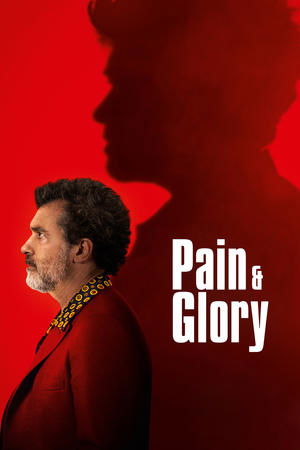
Pain and Glory (2019)
★ 7.4 / 10
Salvador Mallo, a filmmaker in the twilight of his career, remembers his life: his mother, his lovers, the actors he worked with. The sixties in a small village in Valencia, the eighties in Madrid, the present, when he feels an immeasurable emptiness, facing his mortality, the incapability of continuing filming, the impossibility of separating creation from his own life. The need of narrating his past can be his salvation.
Editorial Analysis
Film Commentary & Screenwriting Notes
Pedro Almodóvar crafted Pain and Glory as his most nakedly autobiographical confession, completing a loose trilogy on artistic obsession that began with Law of Desire and Bad Education. The screenplay trades Almodóvar’s signature operatic melodrama for a hushed, contemplative tone, structured through a mosaic of nonlinear memories anchored by physical ailments and emotional paralysis. Production took place largely on sets meticulously duplicating Almodóvar’s actual Madrid apartment, down to his private art collection and mid-century furniture. Antonio Banderas, donning Almodóvar's wardrobe and signature spiky hairstyle, delivered a career-defining performance stripped of swagger, relying on internalized gestures, heavy breathing, and fragile pauses. The pivotal monologue, performed on stage within the film by Asier Etxeandia as the fictional text Addiction, functions as an ingenious meta-narrative device, externalizing Salvador’s buried confessions while questioning the ethics of mining personal romance for dramatic material. Critics praised the work as an unsparing study of creative renewal and somatic aging, earning Banderas the Best Actor prize at Cannes alongside two Academy Award nominations, cementing Spanish auteur cinema's capacity for vulnerable self-mythology.
Quotes from Pain and Glory
"Memory is the best screenwriter."
Scene Context: Salvador reflects on his past, recognizing how subconscious recollections reshape his creative drive when severe physical ailments stall his ability to write new material.
"Life and fiction eventually become indistinguishable."
Scene Context: Salvador ponders the porous boundary between his lived experiences and his cinema during a candid reunion with his estranged former lead actor, Alberto Crespo.
"Creation begins where suffering becomes bearable."
Scene Context: Salvador contemplates how his chronic physical pain stifles his imagination until medical treatment and emotional reckoning allow him to resume artistic work.
"The only thing stronger than memory is desire."
Scene Context: The aging filmmaker confronts lingering romantic longing when his former lover Federico unexpectedly visits Madrid decades after their passionate eighties affair dissolved.
"We spend our lives editing ourselves."
Scene Context: Salvador muses on the instinctive human compulsion to curate personal histories while evaluating old film prints and confronting unresolved familial resentments.