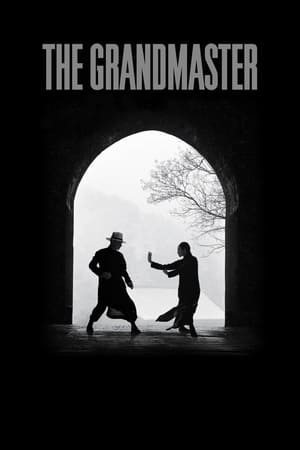
The Grandmaster (2013)
★ 6.6 / 10
The fall of China's last dynasty, a time of chaos, division and war, is the golden age of Chinese martial arts. Legendary kung fu master Ip Man, who will eventually train Bruce Lee, finds his peaceful life interrupted by vengeance.
Editorial Analysis
Film Commentary & Screenwriting Notes
Wong Kar-wai spent over a decade preparing The Grandmaster, transforming a conventional biopic of Wing Chun patriarch Ip Man into an elegiac meditation on vanishing martial traditions. Co-written with novelist Zou Jingzhi and filmmaker Xu Haofeng, an expert in Northern Chinese martial arts, the screenplay strips away genre melodrama in favor of poetic aphorisms and philosophical restraint. Rather than showcasing relentless brawling, Wong structures confrontations as philosophical dialogues, famously illustrated in the symbolic contest where Ip Man must break a piece of flatbread without shattering it. Tony Leung Chiu-wai underwent years of physical training, breaking his arm twice during rehearsals, yet his performance remains understated, letting subtle glances convey Ip Man's quiet grief. Zhang Ziyi offers a fierce counterweight as Gong Er, delivering lines with stoic precision that captures the tragic cost of vengeance and filial duty. Philippe Le Sourd's evocative cinematography mirrors this discipline, capturing raindrops, drifting snow, and train smoke with painterly care. Multiple edits circulated globally due to distributor interference, yet the film endures as an aesthetic high-water mark, celebrating kung fu not merely as combat, but as an interior spiritual quest during wartime displacement.
Quotes from The Grandmaster
"Life is a train. We all get off at different stations."
Scene Context: Gong Er reflects on destiny and parting ways during her final, melancholic reunion with Ip Man in 1950s Hong Kong.
"Seeing clearly is harder than fighting."
Scene Context: Grandmaster Gong explains martial philosophy to Ip Man before their symbolic duel testing precision over sheer physical power.
"Some roads can only be walked alone."
Scene Context: Gong Er asserts her unbending resolve before renouncing marriage and inheritance to avenge her father's death against Ma San.
"A person's life is defined by choice."
Scene Context: Gong Er explains her tragic commitment to vengeance and tradition while reminiscing about what could have been with Ip Man.
"Time changes everything."
Scene Context: Ip Man looks back on the loss of his family estate and pre-war Foshan after rebuilding his life in exile.
"A long road of practice teaches you how much there is still to learn."
Scene Context: Ip Man muses on the lifelong discipline of Wing Chun while demonstrating techniques to aspiring students in postwar Hong Kong.